Why Iowa is attracting tech workers with affordability, ease and opportunity.
This article originally appeared as a sponsored story on USA Today.
By Megan Bannister, for This is Iowa
Historically, Iowa has been primarily known for its robust agricultural industry. However, the state also has a long legacy of fostering technological innovation beyond the fields.
Now, Iowa’s burgeoning tech industry is offering workers opportunities for career development in America’s heartland. In the past, many have gravitated toward the coasts for job prospects, but local industry leaders believe Iowa’s cities and rural communities can offer tech workers professional advancement without sacrificing quality of life.
“I view Iowa’s tech industry as a gold mine of opportunity,” shared Emily Allegretti, an embedded software engineer at Vermeer Corporation and a transplant from Ohio. “Iowa has a strong agricultural and insurance/financial industry, as well as an abundant amount of defense contractors in the region, creating a fascinating junction of different tech jobs, especially in the embedded software space.”
Sought-after jobs might initially attract this growing tech workforce to Iowa, but it’s the welcoming communities, relaxed pace of day-to-day life, and ease of upward mobility that are keeping them there. From shorter commutes to greater job flexibility and ample opportunities for career advancement, Iowa offers a thriving, collaborative tech ecosystem where work-life balance is achievable.
There are other tangible benefits as well. In 2025, Iowa was named the No. 1 “Most Affordable State” in a report by the Common Sense Institute. While inflation continues to drive up costs of groceries, childcare and housing elsewhere in the nation, it found that Iowans aren’t seeing nearly as large a jump in their everyday expenses as residents of other states.
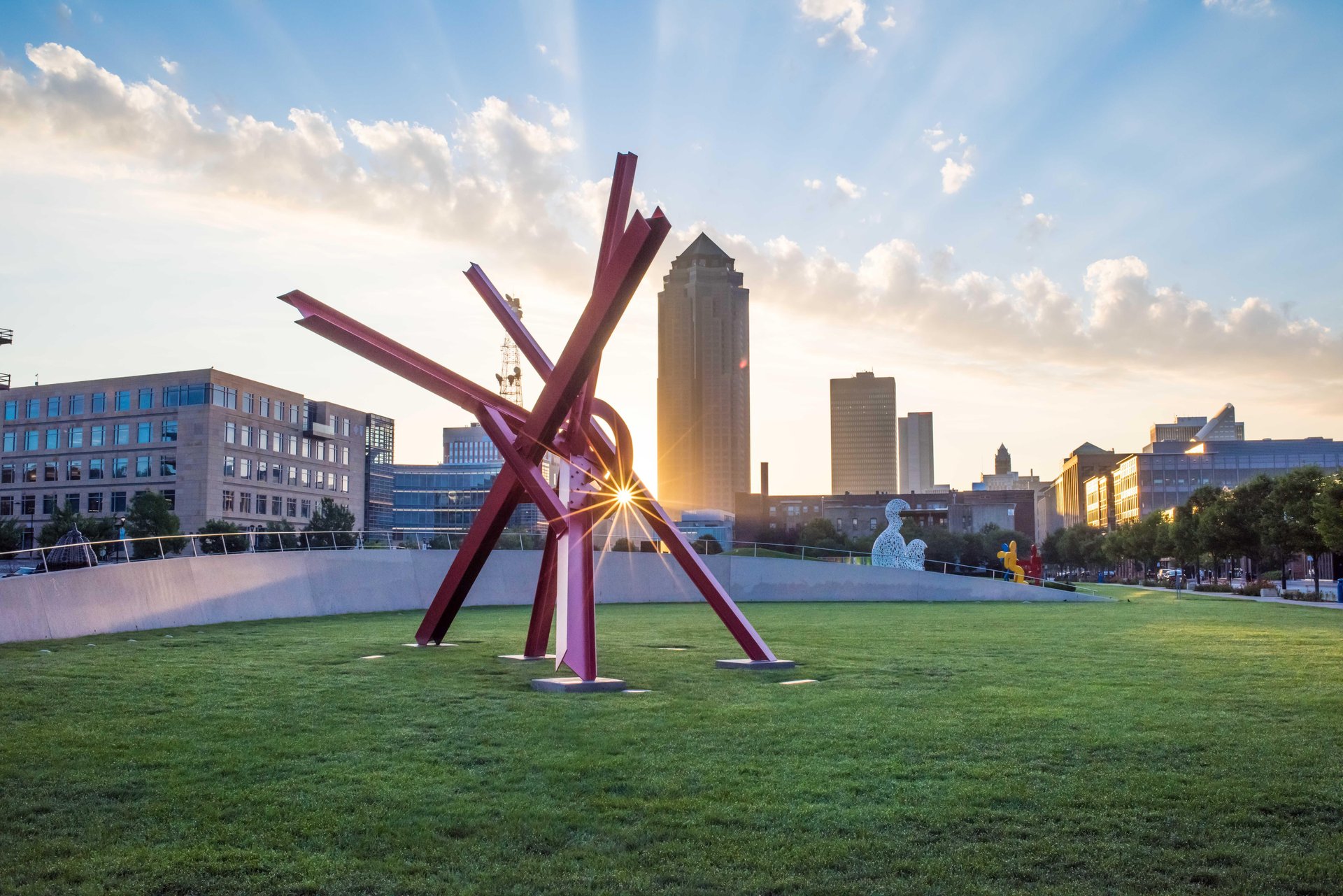
“One of the biggest advantages of living in Iowa is the low cost of living,” said Allegretti. “Iowa is much more affordable to live in compared to other tech-centric cities in the US (think the West Coast or New England). I live in downtown Des Moines in a one-bedroom apartment with a gorgeous skyline view for under $1,200 a month.”
According to cost-of-living data from the Council for Community and Economic Research, in the first quarter of 2026 the average one-bedroom apartment in Iowa ran about $1,100 a month. Compare that to a one-bedroom in San Francisco, which was $4,016 a month – that’s a 265% difference. For an Iowa tech professional earning $112,000 a year, that means rent eats up just 12% of monthly income. In San Francisco, where the average tech salary is closer to $180,000, that same $4,016 rent still consumes roughly 27% of monthly income. That’s over twice the burden, even on a much higher paycheck. That lower cost of living doesn’t just stretch a paycheck further. It gives Iowa tech talent room to save, invest, and build equity years faster than they could in a high-cost coastal market.
Iowa’s tech roots
While Iowa is experiencing a modern tech boom, the Midwestern state has a rich history as a home for innovation and advancement. For instance, in 1892, the first gasoline-powered tractor was developed by John Froelich, who laid the foundations for modern agricultural machinery. Later, between 1939 and 1942, a physics professor and a graduate student at Iowa State University (then named Iowa State College) developed the first electronic digital computer, helping to advance future computing technologies.
Based on this heritage, global corporations in finance, insurance, bioscience and advanced manufacturing are now choosing to base their operations in Iowa due to the state’s commitment to innovation. Precedents like these paved the way for Iowa to become home to employers and industry leaders, such as Collins Aerospace, Corteva Agriscience and Kemin Industries.
Today, Iowa pairs legacy employers with a collaborative startup scene, opening avenues for tech workers to pursue building something new or to grow in a role without losing pace with peers on the coasts.
“Iowa is thought of as a flyover state, but I want to put Iowa on the map to be the next tech hub,” Dr. Jon Lensing, founder of Open Loop, said previously. “The state has provided great economic incentives to continue our growth here.”
Organizations like the Technology Association of Iowa also give tech workers and industry leaders the space and resources to connect and shape the future of the state’s workforce.

Fields of opportunity
In an increasingly difficult job market, Iowa remains a beacon for skilled tech professionals navigating uncertainty when it comes to finding new roles. According to some analysts, Iowa currently ranks No. 2 for opportunity, which means job seekers have a high chance of finding suitable placements.
Allegretti agrees with this analysis, saying, “Iowa is definitely an underrated and affordable place to start your career, which makes it a cheat code to start a tech career and start building valuable and unique skills that will make you competitive in the industry.”
Software developer jobs in Polk County alone are projected to grow from an estimated 5,900 positions in 2022 to 7,230 by 2032, a 22.5% increase. According to Iowa Workforce Development, there are an estimated 455 new openings each year with a median wage of $54.03 an hour, or roughly $112,400 annually. For tech professionals, that combination of high demand and sustained growth means more than just landing a job; it means room to advance, specialize, and build a career on a clear upward trajectory.
The state has equally prioritized attracting and retaining tech-centered companies. In fact, 27.3% of Iowa’s workforce is employed in STEM occupations, which is above the national average of 25%, according to the National Center for Science and Engineering Statistics.

Industry-supported balance
In addition to Iowa’s economic viability and the demand for tech workers, the culture of the state’s tech workforce has become an attractive selling point for workers looking to make a change.
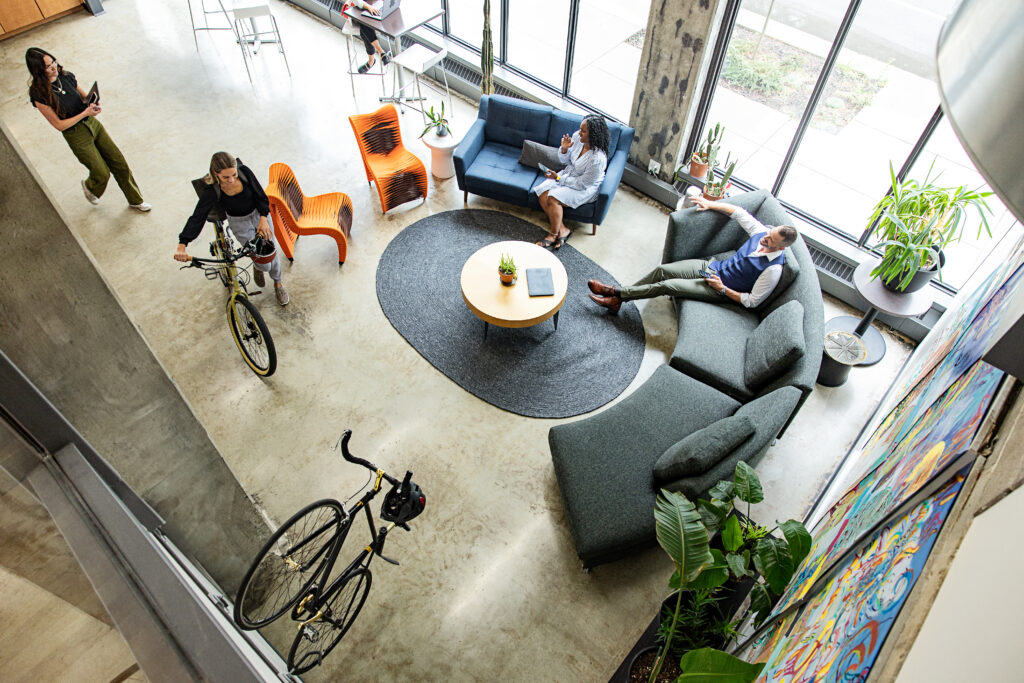
Workers in Iowa enjoy 25% shorter commutes, according to the U.S. Census Bureau, and more employer flexibility than their counterparts nationally. The state also offers more affordable housing and strong schools, making it a desirable place for growing families to settle down.
Similarly, active female tech networks in Iowa give women returning to the workforce additional resources and support to thrive in their next professional chapter without sacrificing time with their family.
“I think there’s an entrepreneurial energy that has really blossomed over the last five years. Maybe that’s because I’ve been more a part of it than before, but to me it’s that sense of community and pride and people really advocating for and supporting fellow business owners and entrepreneurs,” said Emily Steele, the founder of Hummingbirds in a previous statement. “It’s all I know and am used to, but I think that that’s been something people have been delighted by as they move from other states.”
To learn more about Iowa’s emerging tech workforce and employment opportunities, visit ThisIsIowa.com/buildyourtechcareer. You can also access a helpful cost of living calculator or connect with an Iowan directly to learn more about what life in Iowa can be like for you.